

How to Track Gym Progress for Beginners: The Ultimate Simple Guide
A complete step-by-step beginner's guide to tracking workouts, understanding key metrics, avoiding common mistakes, and building long-term fitness habits.

“Guessing is the enemy of progress. If you don’t track your workouts from day one, you are flying blind in the gym.”
Stepping into a gym for the first time can feel overwhelming. You have to figure out how complex machines work, learn proper exercise form, navigate weight room etiquette, and try to follow a workout program.
With so many new experiences happening at once, many beginners skip the most vital habit of all: logging their workouts.
They walk into the weight room, pick up whatever weights feel reasonable on that given day, perform a few random sets, and leave. Six weeks later, they wonder why their body hasn’t changed and why they aren’t getting stronger.
Here is a straightforward, step-by-step guide on how to track your gym progress effectively as a beginner without getting overwhelmed by data.
Comparison: Beginner Tracking Methods
Before choosing a tool, here is how the three main tracking methods compare for someone just starting out:
| Tracking Method | Setup Difficulty | Logging Speed | Progress Visualization | Beginner Friendly Rating |
|---|---|---|---|---|
| Natural Language AI (Beau) | Zero Setup | Extremely Fast (3–5s) | Automatic Charts & Trends | ⭐⭐⭐⭐⭐ (5/5) |
| Paper Notebook & Pen | Very Easy | Fast (10–15s) | Manual Math Required | ⭐⭐⭐⭐☆ (4/5) |
| Traditional Tap Tracker | Complex Routine Setup | Slow (30–60s) | Automatic Charts | ⭐⭐⭐☆☆ (3/5) |
The 3 Core Metrics Beginners Must Record
You do not need to calculate complex sports science formulas like RPE, RIR, or percentage-based periodization when starting out. Keep your focus locked on recording just three fundamental numbers for every set:
- The Exercise Name: What movement did you perform? (e.g., Dumbbell Goblet Squat)
- The Load (Weight): How much resistance did you use? (e.g., 30 lbs)
- Volume (Reps & Sets): How many times did you lift it, and in how many groupings? (e.g., 3 sets of 10 reps)
If you record those three pieces of information for every exercise, you possess 100% of the data needed to apply progressive overload and guarantee continuous strength gains.
3 Popular Tracking Methods for Beginners
1. The AI Natural Language App: Beau (Recommended)
If you want the extreme simplicity of writing in a notebook combined with the powerful automatic charting of modern software, Beau is the gold standard.
Instead of searching through endless dropdown lists or building rigid routine templates, you simply talk or type into the app like you’re texting a workout buddy:
“Goblet squat 3 sets of 10 with 30 lbs”
Beau’s on-device AI reads your sentence, categorizes the movement, logs your weight and reps, and plots your volume on clean progression charts automatically.
2. The Classic Paper Notebook
A small physical notebook and pen remains a reliable choice. It requires no battery, won’t distract you with notifications, and allows you to write notes freely.
The Downside: Analyzing your long-term progress requires flipping through dozens of pages and manually calculating totals with a calculator.
3. Traditional Routine-Based Apps
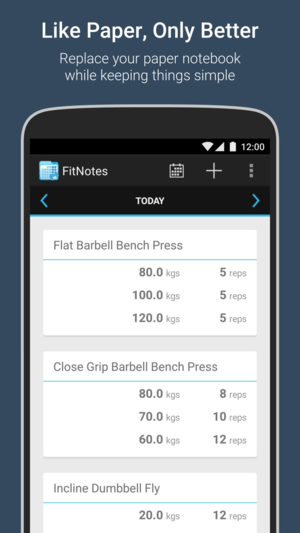
Apps like Strong or FitNotes allow you to tap through pre-built templates. While effective once configured, setting up custom routines and searching exercise libraries can create frustrating digital friction for beginners during their first few weeks.
Step-by-Step: Your First 4 Weeks of Tracking
To build a permanent workout logging habit, follow this simple 4-week timeline:
| Training Week | Primary Focus | Actionable Goal | Success Metric |
|---|---|---|---|
| Week 1 | Habit Formation | Log every single working set, regardless of how light the weight feels. | 100% of sets recorded |
| Week 2 | Baseline Confirmation | Review Week 1 numbers before starting each exercise. Match or beat previous reps. | Zero guessing on weights |
| Week 3 | Small Overloads | Attempt a tiny progression (e.g., add 5 lbs or 1 extra rep to your final set). | PR recorded on main lift |
| Week 4 | Monthly Review | Look at your 4-week volume trend line to confirm upward progress. | Upward volume trend |
Top 5 Beginner Tracking Mistakes to Avoid
- Relying on Memory: Never assume you will remember what weight you used on your third set of shoulder presses last Tuesday. Write it down immediately after completing the set.
- Changing Exercises Every Workout: If you change your entire workout routine every single session, you can never establish a reliable baseline to measure progressive overload. Stick to a core program for at least 8 to 12 weeks.
- Prioritizing Weight Over Form: Increasing the weight plate size while sacrificing range of motion is fake progress. Maintain strict form before adding weight.
- Ignoring Warm-Up Sets vs. Working Sets: Only record your primary working sets in your total volume calculations. Warm-up sets should be noted separately so they don’t skew your progression charts.
- Overcomplicating the Data: Don’t stress over complex heart rate zones or calorie burn estimates. Focus on progressive overload on your main compound lifts.
Summary Checklist for Your Next Workout
- Choose a low-friction tracker like Beau before entering the gym.
- Record the exercise name, weight, and completed reps for every working set.
- Check your previous week’s performance before picking up the weights.
- Aim to add 1 rep or a small amount of weight whenever possible.
Start your fitness journey with clarity and confidence. Download Beau for iOS and start tracking your workouts effortlessly today.