

5 Best Gym Tracking Apps in 2026 (Free & Paid Tested)
We tested the best gym tracker apps for logging your workouts. Here are the top 5 picks for every type of athlete, from weightlifters to casual gym-goers.

Walking into the gym without a plan is a great way to waste an hour wandering between machines. But finding the right app to track your workouts can be just as frustrating. Some apps are too complex, forcing you to navigate through menus and spreadsheets just to log a single set of squats. Others are too simple, lacking the features you need to actually track your progress over time.
We spent the last few weeks testing the most popular gym tracking apps on the market. We logged sets, tracked supersets, and timed our rests. Whether you’re a powerlifter focused on progressive overload or just trying to stay consistent, here are the 5 best gym tracking apps in 2026.
Feature comparison: Top Gym Apps
Before we dive into the detailed reviews, here is a quick feature comparison of our top picks.
| App | Best For | Platform | Free Tier | Pro Price | Input Method | Cloud Sync |
|---|---|---|---|---|---|---|
| Beau | Zero-friction logging | iOS | Yes | Optional | Voice & Text | Local & Cloud |
| Strong | Traditional lifters | iOS + Android | Yes | $4.99/mo | Manual Taps | Yes |
| Hevy | Social lifting | iOS + Android | Yes | $3.99/mo | Manual Taps | Yes |
| FitNotes | Privacy fans | Android | Yes (Free) | None | Manual Taps | Local |
| Strava | Cardio focus | iOS + Android | Yes | $11.99/mo | GPS / Manual | Yes |
1. Beau — Best for zero-friction logging
Most traditional trackers force you to build templates and tap buttons between every set. Beau takes a completely different approach: you just talk to it.
You describe your workout exactly how you’d tell a friend: “I did three sets of eight bench presses at 60 kilos.” Beau uses natural-language parsing on-device to instantly convert your spoken words into structured data. It extracts the movement, the volume, and the load, saving it all to your history.
Why we picked it: When you’re sweating at the gym, the last thing you want to do is navigate an app. Beau removes all friction, allowing you to log workouts in five seconds flat.
- Pros: Voice logging is incredibly fast; no need to build routines in advance; beautifully minimal interface.
- Cons: iOS only for now; requires you to be comfortable speaking at the gym (though text input works just as well).
2. Strong — Best for traditional lifters
Strong has been the gold standard for weightlifting apps for years. It features a massive database of exercises and a highly customizable routine builder. The interface is clean, dark, and focused entirely on logging numbers.
Why we picked it: Strong is the reliable workhorse. If you prefer tapping through a structured list and seeing your previous lifts right next to your current input, Strong does it better than almost anyone else.
- Pros: Massive exercise library; built-in rest timers; clear progression charts.
- Cons: The free tier limits how many custom routines you can save; development of new features has slowed down recently.
3. Hevy — Best for social lifting
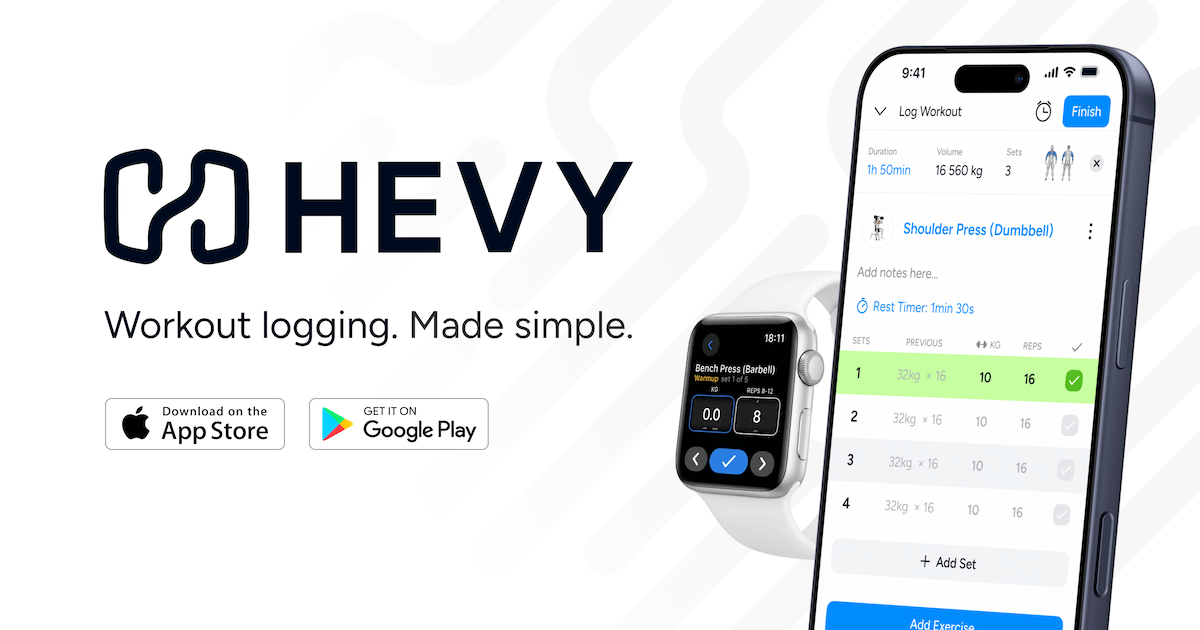
Think of Hevy as Strava for weightlifting. It combines a robust workout tracker with a social feed where you can follow friends, like their workouts, and copy their routines.
Why we picked it: Motivation is half the battle. Seeing your friends hit new PRs can be exactly the push you need to get to the gym. The tracking interface is very similar to Strong, making it easy to switch if you’re looking for more community features.
- Pros: Great social integration; robust Apple Watch app; frequent updates.
- Cons: Social features can be distracting; the interface feels a bit cluttered compared to minimalist options.
4. FitNotes — Best for Android privacy
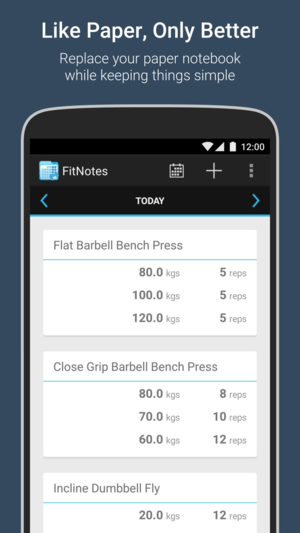
FitNotes is the beloved open-source option for Android users. It is entirely free, contains zero ads, and stores all your data locally on your device.
Why we picked it: FitNotes proves that a great app doesn’t need a subscription model. It has everything you need to log workouts and view volume charts without ever asking you to create an account.
- Pros: 100% free; local storage for ultimate privacy; highly customizable categories.
- Cons: Android only; the UI feels a bit dated compared to modern iOS apps; no built-in sync across devices.
5. Strava — Best for cardio and runners

While the other apps on this list focus on barbells and dumbbells, Strava dominates the cardio world. Whether you’re running on the treadmill, cycling, or doing a HIIT class, Strava tracks it all.
Why we picked it: If your gym time is focused on the treadmill or the rowing machine, traditional weightlifting apps won’t serve you well. Strava provides excellent GPS tracking for outdoor runs and integrates well with indoor cardio machines and heart rate monitors.
- Pros: Unbeatable for running and cycling; massive active community; great integrations with wearables.
- Cons: Paid tier is expensive; terrible for tracking structured strength training sets and reps.
How to choose a gym tracker
The “best” app ultimately depends on how you train and what kind of friction you tolerate:
- If you hate tapping menus and want the fastest logging possible: Choose Beau. It’s the only app that lets you talk to it naturally.
- If you are an Android user on a budget: Choose FitNotes. It is free, private, and powerful.
- If you want to track workouts with friends: Choose Hevy. The social feed adds a fun layer of accountability.
Consistent logging is the only way to see true progress. Pick the app that gets out of your way and lets you focus on the lift.